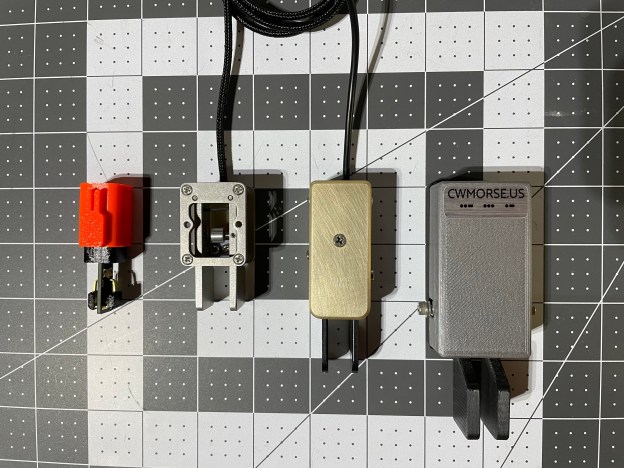
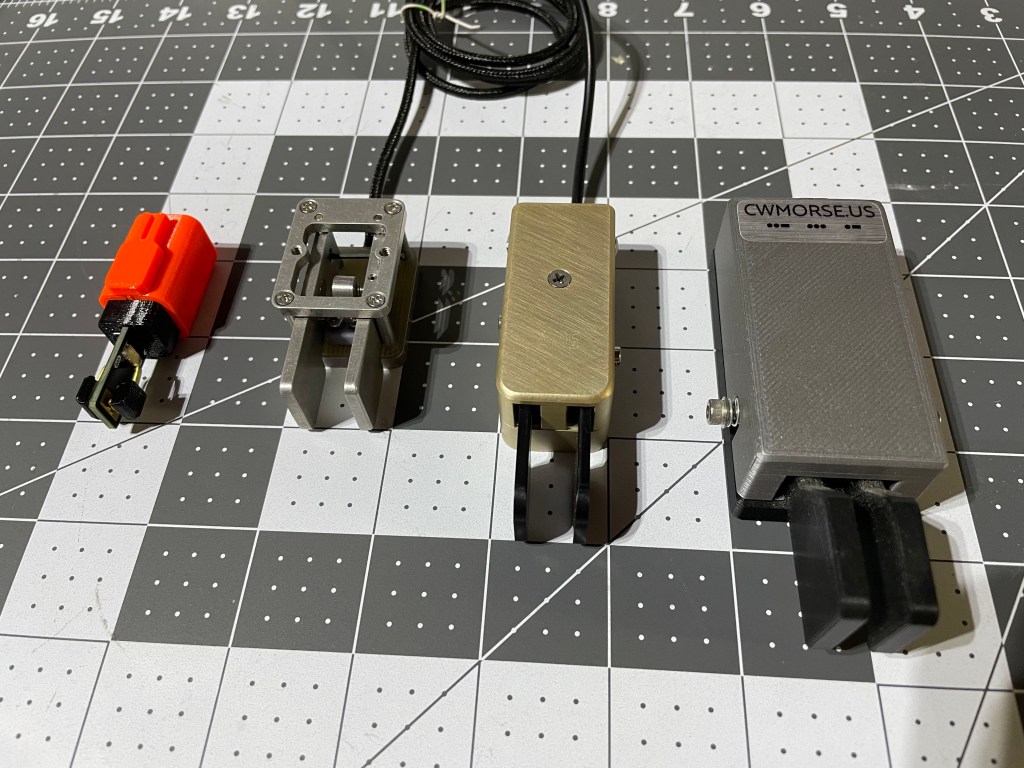
Alliteration aside, with my recent review of N6ARA’s TinyPaddle I noticed that I’ve started a collection of small, portable paddles. I thought it might be useful to do a quick comparison post for everyone’s reference.
Each brings something to the table that the others don’t, while sharing many similarities beyond just portability.
I’ll focus on physical characteristics only – how a paddle feels to a user is subjective, I really like each of these for different reasons, and as such your particular tastes may or may not align to mine.
The Paddles
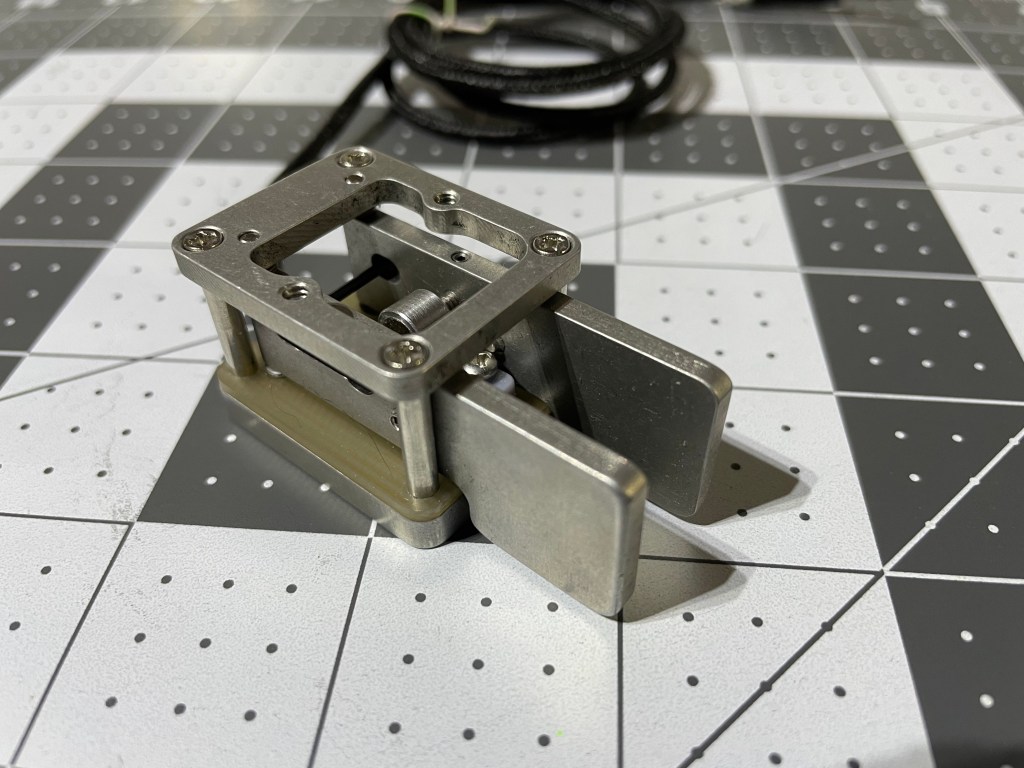
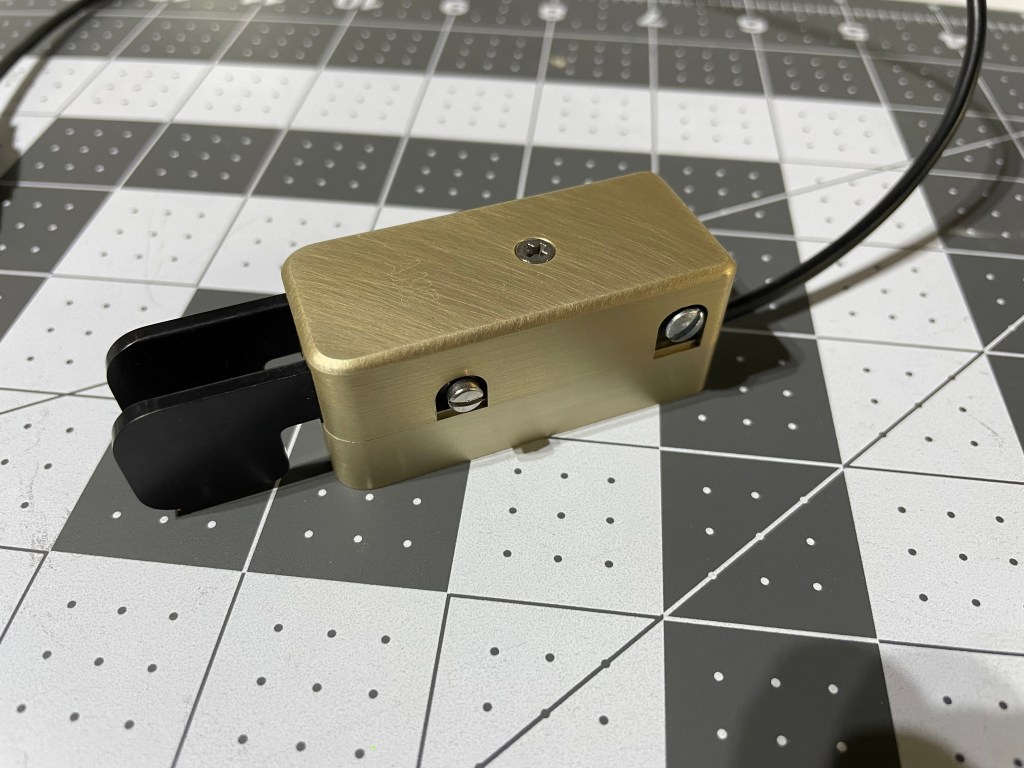
(left to right) N6ARA TinyPaddle, N0SA SOTA Paddle, American Morse Ultra Porta Paddle, and the CW Morse Lightweight Double Paddle. Note that each square grid is 1″ x 1″ (25.4mm x 25.4mm).
I have purchased each of these for portable use and keep 2 of them in my bag each time I pack things up to leave the house. They are all small and light enough that having a backup means that I don’t have to stop playing radio if something breaks (and to date none have – I’m just paranoid).
NOTE: I am using my cheap set of calipers and a kitchen scale, and as such all measurements are close enough but perhaps not precise.
I spent the last week on a road trip that took me 3000+ miles (4800+ kilometers) round trip from Minnesota to Utah and back.
Upon return I found a new item in my mailbox.
N6ARA makes what has to be – at least to my knowledge – the smallest CW paddle around.
I mean, this thing is really, really small.
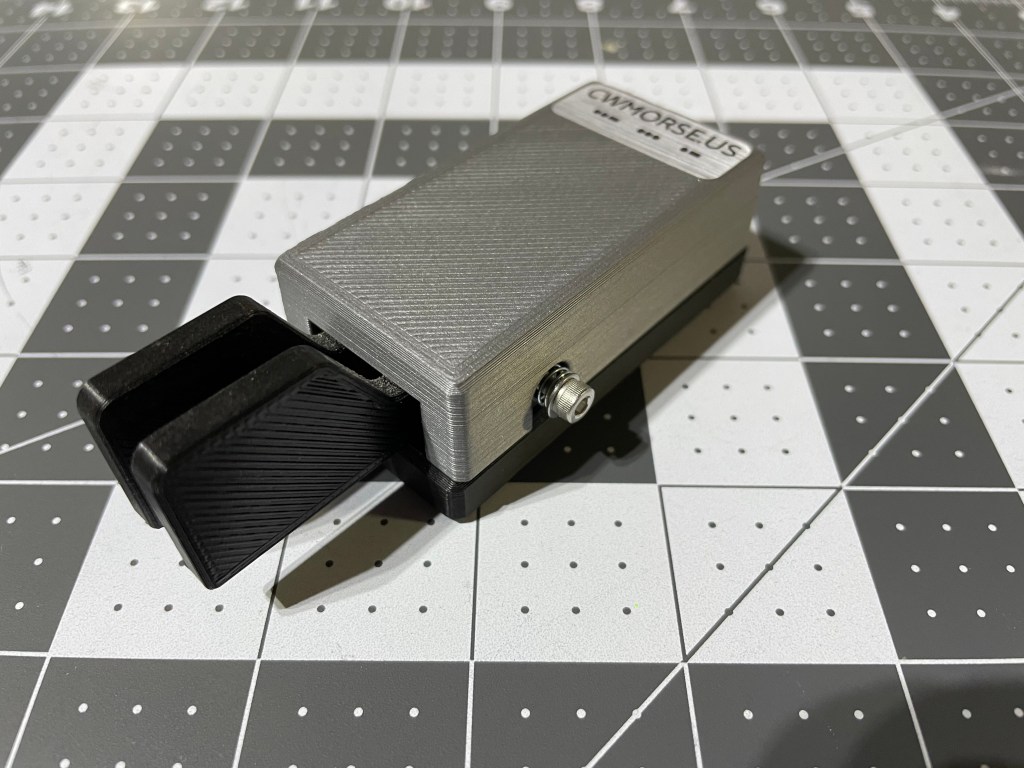
The N6ARA TinyPaddle-Jack next to another popular 3D printed paddle from cwmorse.us – seriously awesome paddle that is also well constructed and great for portable use
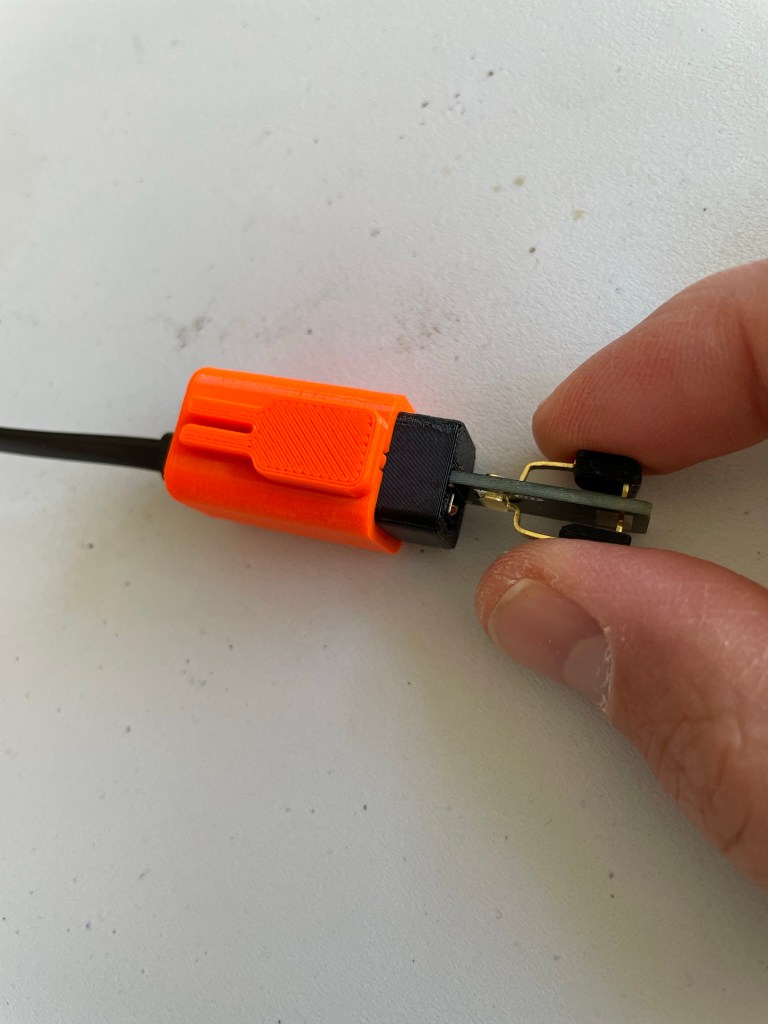
Even having seen images online, it didn’t convey how truly tiny the TinyPaddle really is. I’m almost scared to lose it.
So what is the TinyPaddle-Jack?
The TinyPaddle-Jack is a kit or preassembled backup or ultraportable iambic paddle. It is smartly designed as you will see, and superbly constructed.
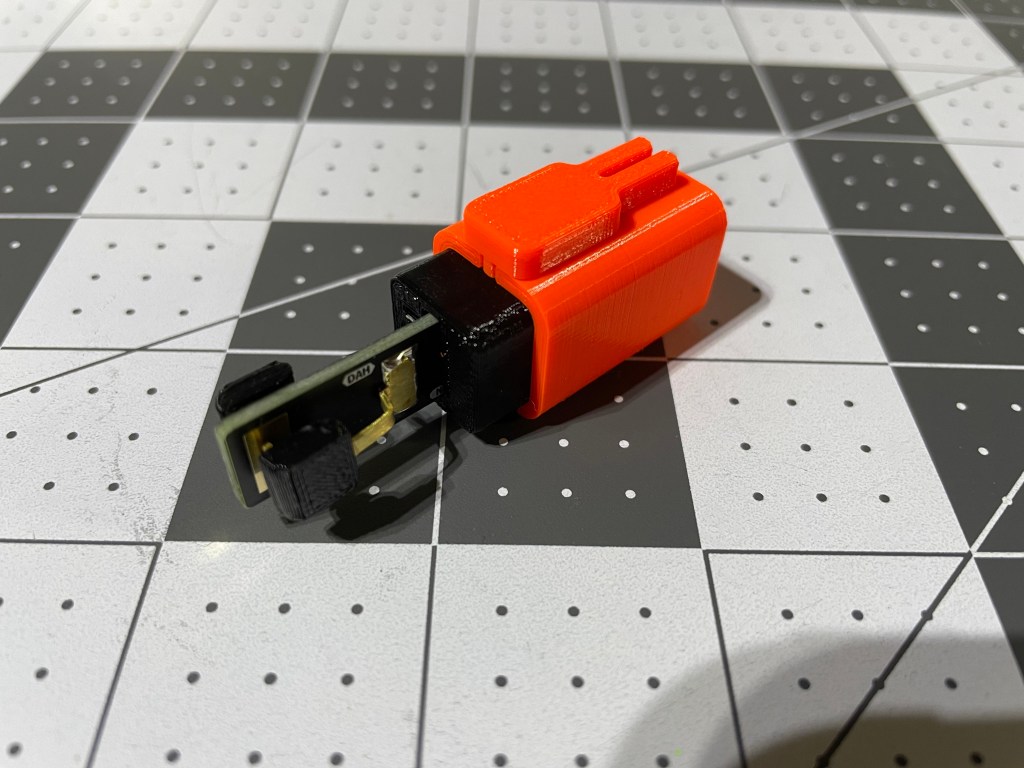
The assembled paddle consists of the paddle and audio port (one piece), a 3D printed holder body (black in the images), a 3D printed holder cover (orange in the images), and an adjustment tool that clips onto the holder cover.
The holder cover allows the paddles to be protected in transit, and then by flipping the paddle around it becomes a holder extension that allows for one hand to hold the paddle in position while the other hand sends those glorious dits and dahs.
Some photos that hopefully do it justice.
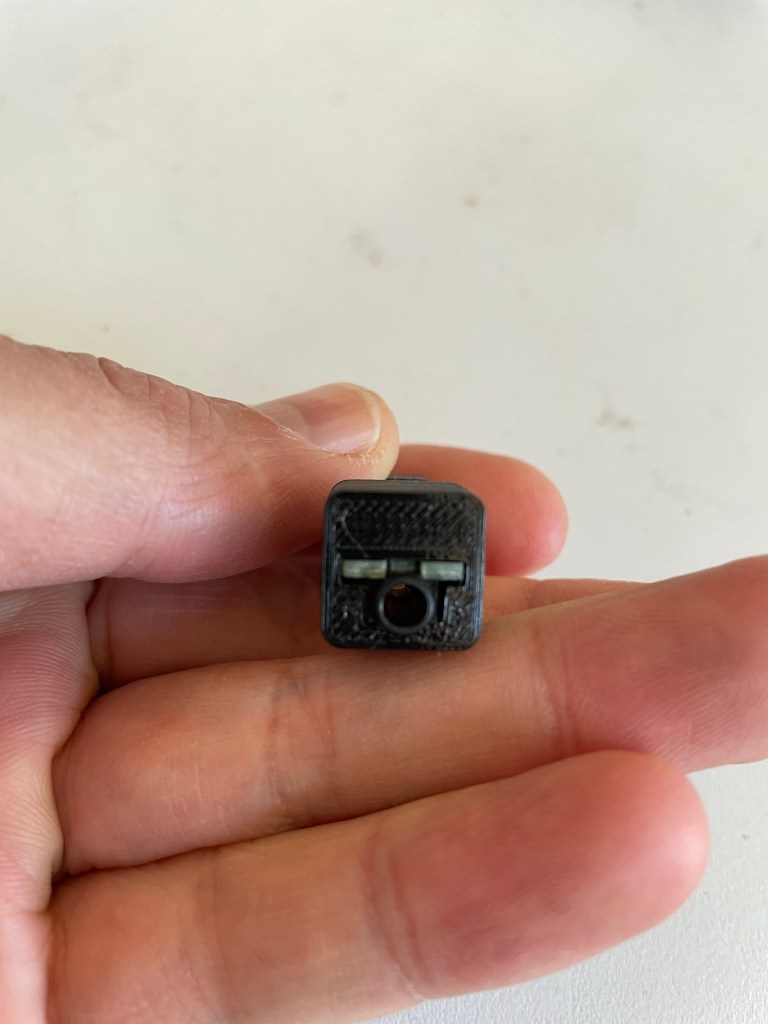
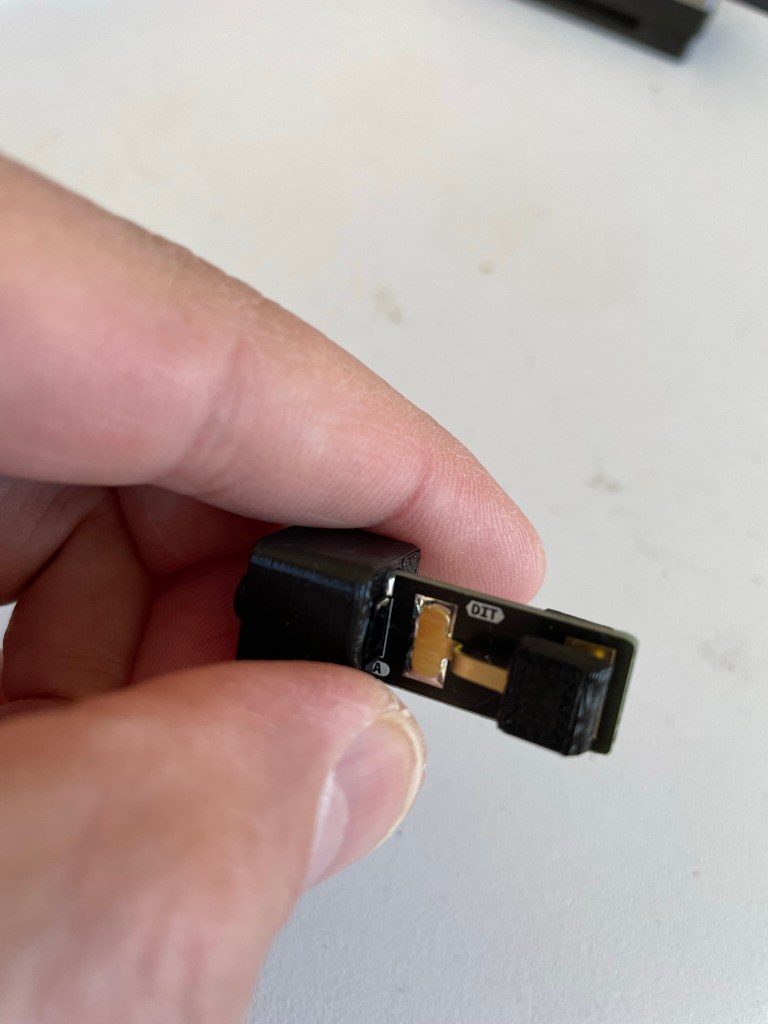
Removed from the holder cover. You can see the audio jack at the top left of the paddle body.Audio jack side of the paddleCloseup of the working end of the paddle. Note that each side is labeled “DIT” and “DAH” so that you can quickly ensure that you’re holding it right.I would say that I have average sized hands for an adult male, so you can see how the paddles are quite small compared to my finger and thumb.
N6ARA has an overview video you can watch here.
Coming in at a svelte 0.3 ounces or 8 grams without the audio cable, it disappears into your kit and won’t weigh you down.
N6ARA also publishes STL files so that you can print your own parts for building or replacing pieces as needed.
I haven’t had this out and on the air – yet. I have spent quite a bit of time with this on my Morserino to get used to the size and make sure it is adjusted to my liking. I like to do that instead of making other operators suffer through my fist.
The size does take some getting used to. Again it is really small, and like most portable paddles requires the use of both hands to be effective. I’m not even sure you could mount this with Velcro or equivalent and still be able to keep it still. There is just too little surface area for me to be confident of any mounting solutions, though I have not tried any to date.
Having said all of that, I do like the feel of it. It is responsive, and after a couple of tries I found myself able to consistently send characters correctly at 20-22 wpm which is my current upper limit on other small paddles. Cranking things up to 25 wpm I started to hit enough errors that I wouldn’t go on the air with my skill level where it is with this paddle.
But that is more my personal failing and not the paddle.
I’m 5+ weeks into the Intermediate course from CWOps (having completed the Basic course last fall) and I’ve been contemplating my learning path lately and how it relates to spoken language learning.
WARNING: This will be more of a brain-dump style post with lots of rambling on and on.
You’ve been warned. 😉
Through high school I studied Mandarin Chinese. All 4 years. My teacher wasn’t much of a teacher. He was tenured (or whatever the equivalent was for that level of educator) and didn’t care much about our learning as much as drawing his paycheck. He did, however, really like high school girls which is why the majority of his students didn’t get scores worth the work they put into them – unless they were cute that is.
I wasn’t cute (nor am I now).
I also wasn’t a high school girl (nor am I now).
About the only things I remember learning in his class was how to swear in Chinese and that some Chuck Norris movies have nudity.
Seriously awesome as a teenager to have a teacher show movies all semester.
That isn’t the point I guess. The point is that I really didn’t learn how to speak, read, or write Mandarin until I found myself living on the island of Taiwan at 19 years old.
Taiwan is a beautiful albeit crowded place, filled with wonderful people and amazing food. I spent two wonderful years there learning and growing as a person.
I’m getting hungry just thinking about my time there…..
I was fully immersed in the language, people, and culture and found my language skills exploding.
You see, I had to use it daily if I wanted to get around.
Many people were learning English. It is taught in all the schools and just about everybody wants to practice some words with you. Even more important to a language learner like myself, they all were extremely willing to be patient with a foreigner trying to speak and hold a conversation in Chinese.
They were also quite forgiving as some words, if spoken with the wrong intonation, can have some embarrassing outcomes. (My worst was 引導 (Yǐndǎo), which means guide, but if the tones are wrong refer to female genitalia. Couldn’t figure out why they were giggling so much until much later.)
Yeah…..languages are fun 😉
I carried a small notebook with me everywhere and wrote down common Chinese characters that I saw during my day. I would rush back to my apartment each evening and spend time reviewing my list, looking them up in my huge dictionary, and making notes on pronunciation and meaning in the margins.
The next day I would go through the same process again, only I would also be looking for the characters from the previous day and making sure I could recognize them when I saw them.
Within about 6 months I was able to read common words and phrases to navigate the city I lived in, and by the end of my first year living there I could pick up a newspaper or magazine and understand most of what I saw.
Immersion is key to language learning.
I’m using this example and juxtaposing it with learning CW because with both, there is an association of something that doesn’t look or sound like what we already understand (Chinese words don’t sound like my native English, and CW doesn’t sound like ABC’s).
Ok, maybe not an apples-to-apples comparison. More like an apples-to-antelopes one.
Mandarin is a natural language, one that is spoken by millions world-wide and all languages (that I know of) have word-for-word associations with my native English, or at least some phrase or meaningful equivalent if not word-for-word
CW is a way to spell words, which at higher speeds can become more about word recognition than character recognition, but it is still individual characters being sent.
People don’t go around spelling out their words in English to each other.
And Mandarin is even less about spelling as characters themselves are whole words. No phonetic spelling. While they do have “bo po mo fo” to help teach character recognition, it isn’t an alphabet.
But bear with me.
The process of learning the alphabet in CW is a fairly quick one. I say fairly quick because unlike learning a new spoken language, you already know the letters. You just need to associate the alphabet characters with a new sound.
While there are many methods to picking up the basics, they usually involve repetition of the characters individually at first, then combined with others.
Some methods involve starting with whole words.
Choose the method that works best for your learning style.
My notebook I carried around every day, jotting down new characters and referencing ones I had already seen before is similar to taking recorded CW sound files (https://morsecode.ninja/ – seriously though, bookmark that site!) with me in the car or walking the dogs. The MP3 files with the “CW – spoken word – CW repeated” allow me to try to beat the announcer and if I don’t, have a follow up that reinforces the correct character or word.
Once the ABC’s were understood and I had a relatively good level of confidence in recognition there, I would make a point of taking the street signs along my path and vocalizing dits and dahs to sound them out as I go.
Morse Code Ninja has many, many files available which include some to build upon the alphabet with two-letter words, three-letter words, common QSO words, and more. All at speeds from 15 to 50 words per minute.
My goal the last year has been to make CW a part of my daily routine and get to 18-20 wpm on the air. Right now, 9 months in to my journey I am comfortable at sustained 15-16 wpm on the air (real speed, not Farnsworth), and 25-27 wpm for up to 5 character words (Farnsworth).
CWOps helps a ton with that goal, providing a structured program and twice-weekly sync ups with others to ensure that I get feedback and tips. My progression accelerated substantially after 4 months of learning on my own once I got into the course.
Progression in CW, like in language, is a function of time spent immersed in the practice. Fortunately you don’t need to travel to the other side of the planet to become immersed.
Just down to your shack.
How much time do you spend each day hearing others sending CW on the air?
How much time do you spend on the air sending it yourself?
I’m currently comfortable at a sustained 12-13wpm, or that spacing with a Farnsworth at 20+. I’m hoping to bring my sustained to 20wpm by the end of this course.
I first saw this kit online this last summer and was immediately intrigued. Fast forward to obtaining the December 2021 edition of QST where they did a review of the radio, and I knew I needed to get one.
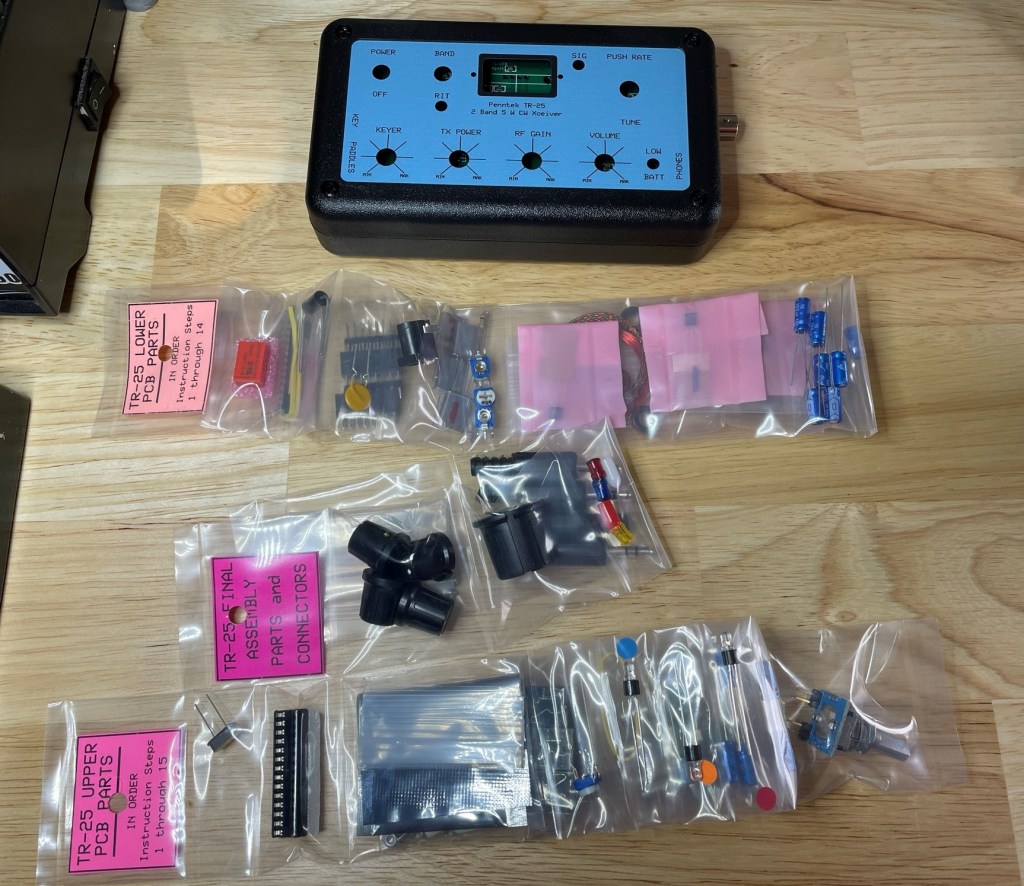
The kit arrived in a well packed box about 1 week after placing my order. Unpacking it I have the following contents:
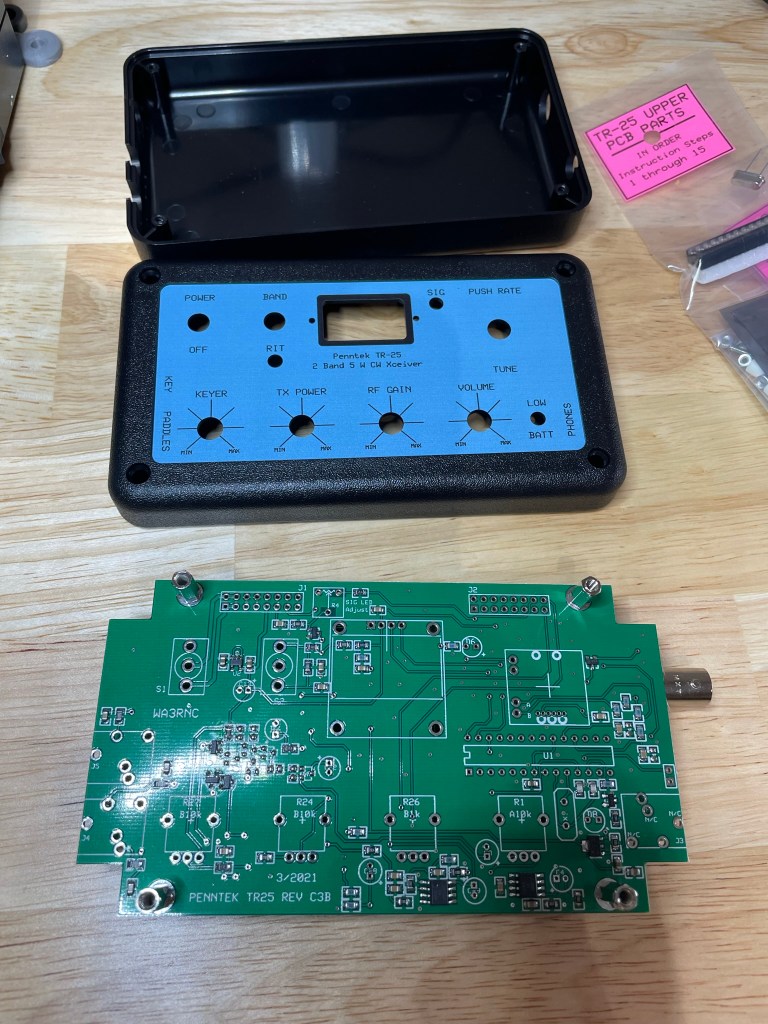
The PCBs are packed inside the radio case, and all the individual parts are packed together based on which part of the radio is being assembled.
For example, all the lower PCB parts are packed together and separate from the upper PCB parts. Even more convenient is that within each set of parts, each one is organized in the order of assembly. A welcome usability improvement over other kits I’ve done where parts arrive loose in a single plastic bag.
Also included are print outs of the assembly manuals, which are likewise separate pages for each section
Installation of all components is very straight forward. If you can solder, you can install all the parts.
There are 6 toroids that need winding. None are overly difficult (I still have flashbacks of T1 on the QCX mini ;)). The directions are very easy to follow and there are picture to validate your windings against.
I’m not going to go through a step-by-step of the assembly – the manuals do that for you. K0SSK also has a great post showing assembly and testing of the kit.
Assembled minus the bottom half of the case – need access to the pots to perform final checks and adjustments. Nice clear OLED screen. Always makes me smile to see things work as expected, even more so that I didn’t let the magic smoke out. 🙂
Quick Comparison
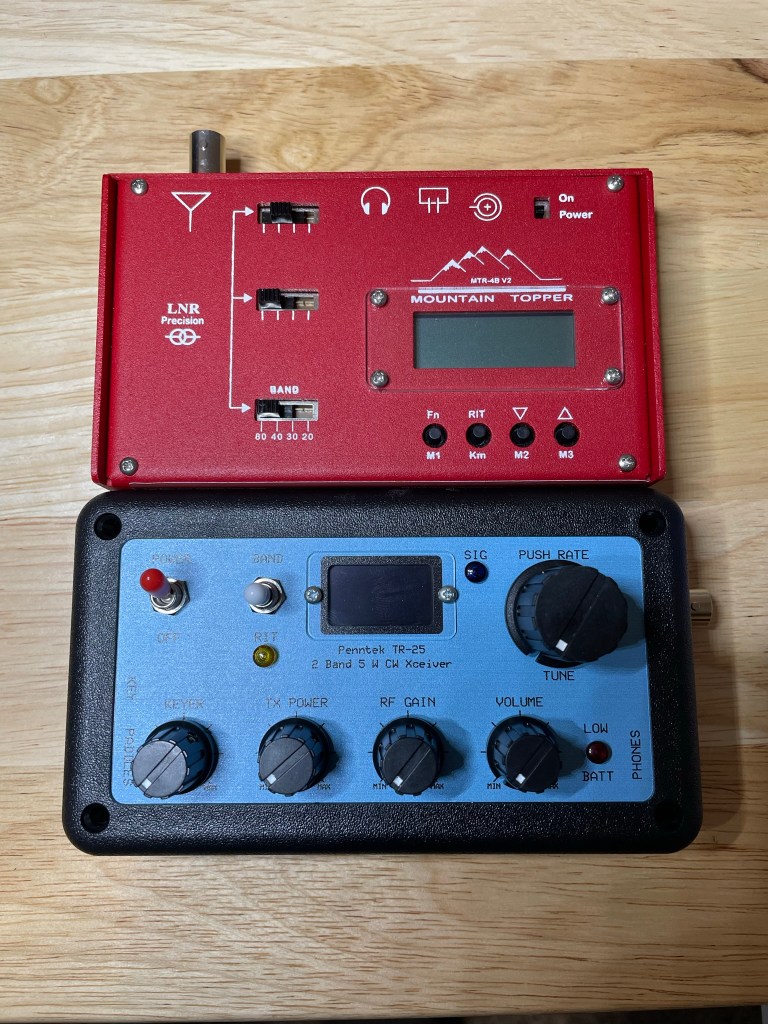
Looking at my other radios, the size lends itself to being compared with my Mountain Topper from LnR Precision.
Both come in at roughly the same dimensions. The Mountain Topper is 4 bands (80/40/30/20) compared to the TR-25’s 2 bands (20/40). While both radios offer QRP portability for commonly used bands, you can see that the tradeoff is either usability (a control for everything) vs breadth of capabilities (more bands, memory slots, etc.).
It is a little of an apple and orange comparison when putting a commercially built radio up against a kit given that the MTR comes assembled, but it is the only multi-band radio that is close to the TR-25 in my collection.
Minor Nits
There are a few things missing from this radio that others have, such as:
No memory slots for recorded SOTA/POTA/CQ messages
No visual indication of WPM for the Iambic-B (there is no Iambic-A support) keyer, the dial simply has Min/Max markers
The design is intuitive and having a dial/knob/toggle for all settings is actually nice thing given how many radios use menu and sub-menus to death, but they do stick up from the radio and might be subject to being broken in the field – time will tell
These are minor nits in my opinion as not everybody needs every bell and whistle to enjoy SOTA/POTA/QRP operations.
Conclusion
This post is focused on the quality of the kit and what I received for my money. I have not yet gotten in on the air and will follow up with my impressions there. For now, keeping things focused on the kit building side.
The TR-25 is easy to assemble, with 4-9 watts of output depending on band and power input, no hideous menu structures to memorize (everything has a switch or knob on the face). A great little radio that can be put together and be on the air quickly and easily.
NOTE: Penntek is coming out with the TR-45L 4 band transceiver that is currently in beta testing. It looks a bit “old school” and I’m definitely intrigued.









 kd0hbu