I’m 5+ weeks into the Intermediate course from CWOps (having completed the Basic course last fall) and I’ve been contemplating my learning path lately and how it relates to spoken language learning.
WARNING: This will be more of a brain-dump style post with lots of rambling on and on.
You’ve been warned. 😉
Through high school I studied Mandarin Chinese. All 4 years. My teacher wasn’t much of a teacher. He was tenured (or whatever the equivalent was for that level of educator) and didn’t care much about our learning as much as drawing his paycheck. He did, however, really like high school girls which is why the majority of his students didn’t get scores worth the work they put into them – unless they were cute that is.
I wasn’t cute (nor am I now).
I also wasn’t a high school girl (nor am I now).
About the only things I remember learning in his class was how to swear in Chinese and that some Chuck Norris movies have nudity.
Seriously awesome as a teenager to have a teacher show movies all semester.
That isn’t the point I guess. The point is that I really didn’t learn how to speak, read, or write Mandarin until I found myself living on the island of Taiwan at 19 years old.
Taiwan is a beautiful albeit crowded place, filled with wonderful people and amazing food. I spent two wonderful years there learning and growing as a person.
I’m getting hungry just thinking about my time there…..
I was fully immersed in the language, people, and culture and found my language skills exploding.
You see, I had to use it daily if I wanted to get around.
Many people were learning English. It is taught in all the schools and just about everybody wants to practice some words with you. Even more important to a language learner like myself, they all were extremely willing to be patient with a foreigner trying to speak and hold a conversation in Chinese.
They were also quite forgiving as some words, if spoken with the wrong intonation, can have some embarrassing outcomes. (My worst was 引導 (Yǐndǎo), which means guide, but if the tones are wrong refer to female genitalia. Couldn’t figure out why they were giggling so much until much later.)
Yeah…..languages are fun 😉
I carried a small notebook with me everywhere and wrote down common Chinese characters that I saw during my day. I would rush back to my apartment each evening and spend time reviewing my list, looking them up in my huge dictionary, and making notes on pronunciation and meaning in the margins.
The next day I would go through the same process again, only I would also be looking for the characters from the previous day and making sure I could recognize them when I saw them.
Within about 6 months I was able to read common words and phrases to navigate the city I lived in, and by the end of my first year living there I could pick up a newspaper or magazine and understand most of what I saw.
Immersion is key to language learning.
I’m using this example and juxtaposing it with learning CW because with both, there is an association of something that doesn’t look or sound like what we already understand (Chinese words don’t sound like my native English, and CW doesn’t sound like ABC’s).
Ok, maybe not an apples-to-apples comparison. More like an apples-to-antelopes one.
Mandarin is a natural language, one that is spoken by millions world-wide and all languages (that I know of) have word-for-word associations with my native English, or at least some phrase or meaningful equivalent if not word-for-word
CW is a way to spell words, which at higher speeds can become more about word recognition than character recognition, but it is still individual characters being sent.
People don’t go around spelling out their words in English to each other.
And Mandarin is even less about spelling as characters themselves are whole words. No phonetic spelling. While they do have “bo po mo fo” to help teach character recognition, it isn’t an alphabet.
But bear with me.
The process of learning the alphabet in CW is a fairly quick one. I say fairly quick because unlike learning a new spoken language, you already know the letters. You just need to associate the alphabet characters with a new sound.
While there are many methods to picking up the basics, they usually involve repetition of the characters individually at first, then combined with others.
Some methods involve starting with whole words.
Choose the method that works best for your learning style.
My notebook I carried around every day, jotting down new characters and referencing ones I had already seen before is similar to taking recorded CW sound files (https://morsecode.ninja/ – seriously though, bookmark that site!) with me in the car or walking the dogs. The MP3 files with the “CW – spoken word – CW repeated” allow me to try to beat the announcer and if I don’t, have a follow up that reinforces the correct character or word.
Once the ABC’s were understood and I had a relatively good level of confidence in recognition there, I would make a point of taking the street signs along my path and vocalizing dits and dahs to sound them out as I go.
Morse Code Ninja has many, many files available which include some to build upon the alphabet with two-letter words, three-letter words, common QSO words, and more. All at speeds from 15 to 50 words per minute.
My goal the last year has been to make CW a part of my daily routine and get to 18-20 wpm on the air. Right now, 9 months in to my journey I am comfortable at sustained 15-16 wpm on the air (real speed, not Farnsworth), and 25-27 wpm for up to 5 character words (Farnsworth).
CWOps helps a ton with that goal, providing a structured program and twice-weekly sync ups with others to ensure that I get feedback and tips. My progression accelerated substantially after 4 months of learning on my own once I got into the course.
Progression in CW, like in language, is a function of time spent immersed in the practice. Fortunately you don’t need to travel to the other side of the planet to become immersed.
Just down to your shack.
How much time do you spend each day hearing others sending CW on the air?
How much time do you spend on the air sending it yourself?
I’ve been done with the CWOps Basic Course now for a couple of weeks and felt that it was time to post my thoughts on being a participant of the program and what I got out of it.
They offer multiple courses for different skill levels.
Beginner (Introduction to CW and learning the characters)
Basic (Build head copy skills and on-air QSOs)
Intermediate (Recognize words as sounds, increase head copy speed)
Advanced (Move rocks with your mind while wearing a Jedi master as a backpack)
Ok, I made that last description up, but you can see the progression from start to finish and Advanced is really about getting that speed up which includes contesting speeds of greater than 30wpm.
Already having spent quite a bit of time learning the characters, I started with the Basics course. This is very much a student driven course. That means that they have developed the program which lasts 8 weeks, and have setup practice routines for every day in-between. It is up to the student to drive their own practice and effort. Students then meet twice weekly as a group with a CWOps Advisor.
Classes are virtual and make use of both audio and video to ensure that everyone is able to interact as necessary. We practice using Farnsworth at 20+wpm and begin at 6wpm spacing, ramping up to 12-14 by the end.
Personally, having a group of like-minded individuals that were coming together at relatively similar skill levels to converse and grow together made a huge difference in my advancement in CW. This honestly surprised me as I tend to be more introverted by nature.
Our advisor was Christopher Barber – WX5CW – and I couldn’t have asked for a better mentor. He is driven for his student’s success, passionate about CW and getting on-air, and a generally great guy. Always available to answer questions, as we progressed in the class he even took time out of his weekends to try and get on the air for practice between sessions.
All that while balancing work and family.
At the start of the program in late-August, I had done a couple of “QSOs” (I use quotes since they were embarrassingly bad on my part and sometimes incomplete).
Having just completed the course, I’ve racked up 30+ QSOs all across the US and have even done one POTA activation. I am operating at 13-14wpm, whereas I was previously stumbling through a QSO at 6-8wpm (if that).
Instead of abject terror when I send a CW, I am incredibly more comfortable copying what I hear and even asking for clarity when I cannot do so (instead of fearing a whole new onslaught of dits and dahs that I won’t understand).
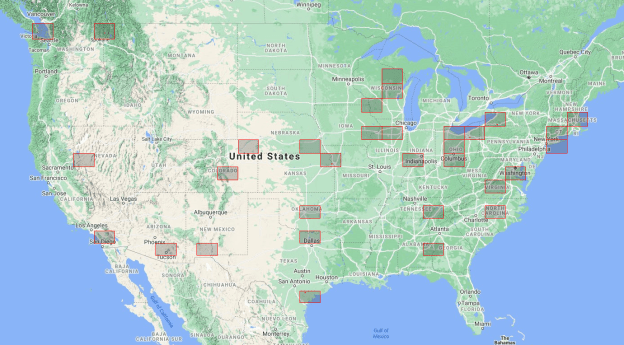
They say that the “proof is in the pudding”:
How do you like that pudding? Each grid square is a CW QSO that I’ve done since the start of the class. None of my classmates are included above – all are random on-air QSOs with strangers.
Verdict
In the end, I cannot recommend CWOps courses highly enough. You will get out of it what you put in, but I believe that for any skill level they have a well thought out course and anyone looking to become more proficient in CW would benefit in some way.
Classes run three times each year, and you can sign up at their registration page.
I’m signing up for the Intermediate course if that tells you anything.
After last weekend’s failure to activate Afton State Park (K-2466), I decided to take my learnings and head back out to the park.
This time I chose to record the session so that I could go back and review. As a new CW operator, this is invaluable and I’ve done it at home with just an audio recorder to check my progress and blind spots – I highly recommend doing so.
I chose 20 meters and had 10 contacts within about 30 minutes of being setup.
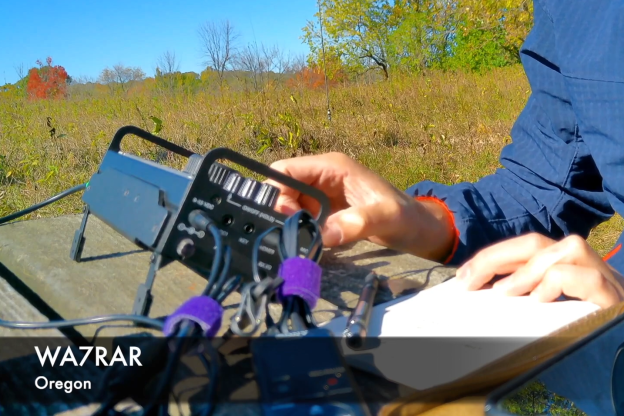
Anyway, here is the video:
For reference, here is what I took with me:
Elecraft KX3
Chameleon Antenna MPAS Lite w/coax and necessary BNC adapter
Elecraft KXPD3 Paddle
Bioenno 4.5Ah Lithium Iron Phosphate Battery (overkill for what the KX3 draws)
Sony ICD-UX570 Audio Recorder
Pencil and Paper for recording QSOs
iPhone 12 for POTA spotting, RBN, etc.
Goruck GR1 for hauling everything
Elecraft AX1 as a backup antenna
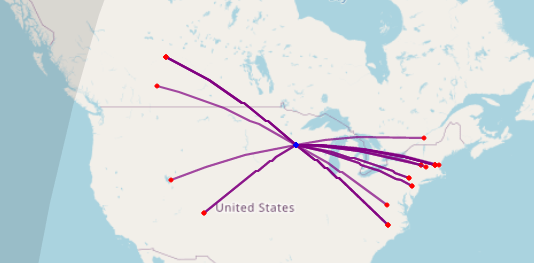
Here is what RBN saw on 20m:
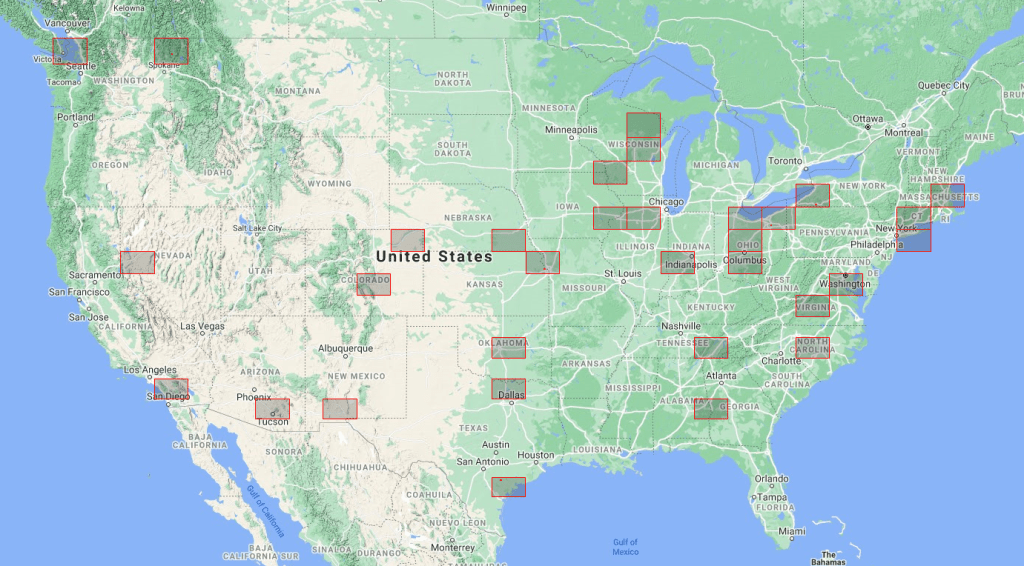
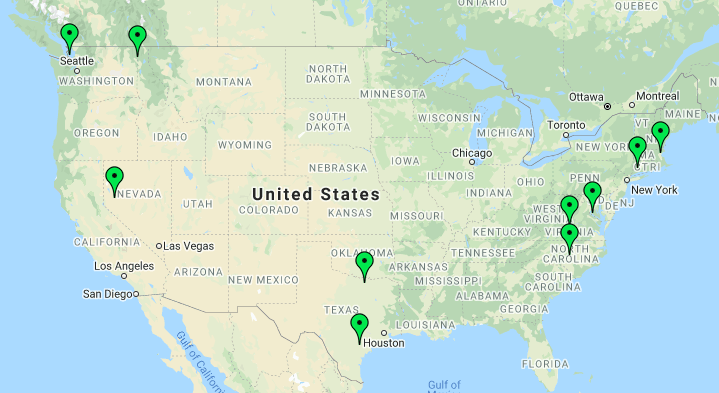
And here is a map of the QSOs I logged on 20m:
A great day in a beautiful part of my home state in all the glory of fall colors.
I’m a few weeks into the CWOps Basic Course and, with some experience and time under my belt, felt it was time to post an update on how things are going.
First off, the course is not a traditional type of class. Students are expected (and rightly so I believe) to drive their own progress via daily practice routines that are laid out simply and in a highly consumable manner. (read: if I can follow it, you can too)
The focus starts on Instant Character Recognition (ICR), where in a half second or less your brain associates the character with the CW being received. This would be similar to someone holding up a card with a random letter or number on it and your brain instantly knowing which one it is visually. If you’re reading this, you’re already doing that with the alphabet and what you see on this screen.
There are tools and exercises along the way to train your brain to pick out the sounds quicker and quicker each week. More complex activities are then introduced as words and phrases are built out and expanded.
There are two sessions each week with an advisor, who provides guidance and inputs along the way. They assess each student’s progress at regular checkpoints, and will point out errors.
So how is it going?
Well, I am surprised (pleasantly so) how fast I am actually progressing. I started off my CW journey earlier this year doing a lot of repetitive learning of characters on my own, using apps like Morse Mania and listening to audio files developed by Morse Code Ninja (seriously give that guy a donation – his work is phenomenal). That gave me a solid foundation for the Basic Course that I’m in now. I’m seeing definite improvements in recognition of my problem characters that plagued me for weeks prior. I can follow QSOs more easily now, and my fear of getting on the air has lessened quite a bit. This at a little less than halfway through the course.
The group is fantastic. We all are progressing and struggling in different areas, but we take the time to work together via Discord video chats to push each other along.
I highly recommend this to anyone looking to learn or significantly improve their CW abilities. The coursework is well planned, the advisor has been amazing, and it is exactly what I needed.







 kd0hbu