Tag Archives: Antennas

First Impressions – KH1

I’ve had it less than a week but thought I’d take a moment to share my thoughts after the first use. No pictures though as they are really easy to find and given that this is a handheld setup, I didn’t take any with both hands being occupied for my first use.

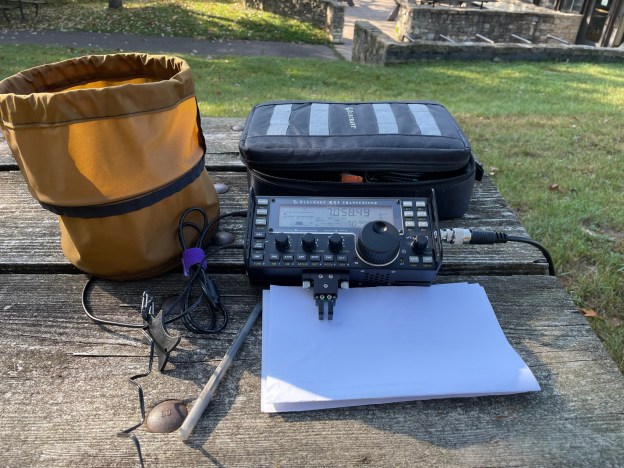
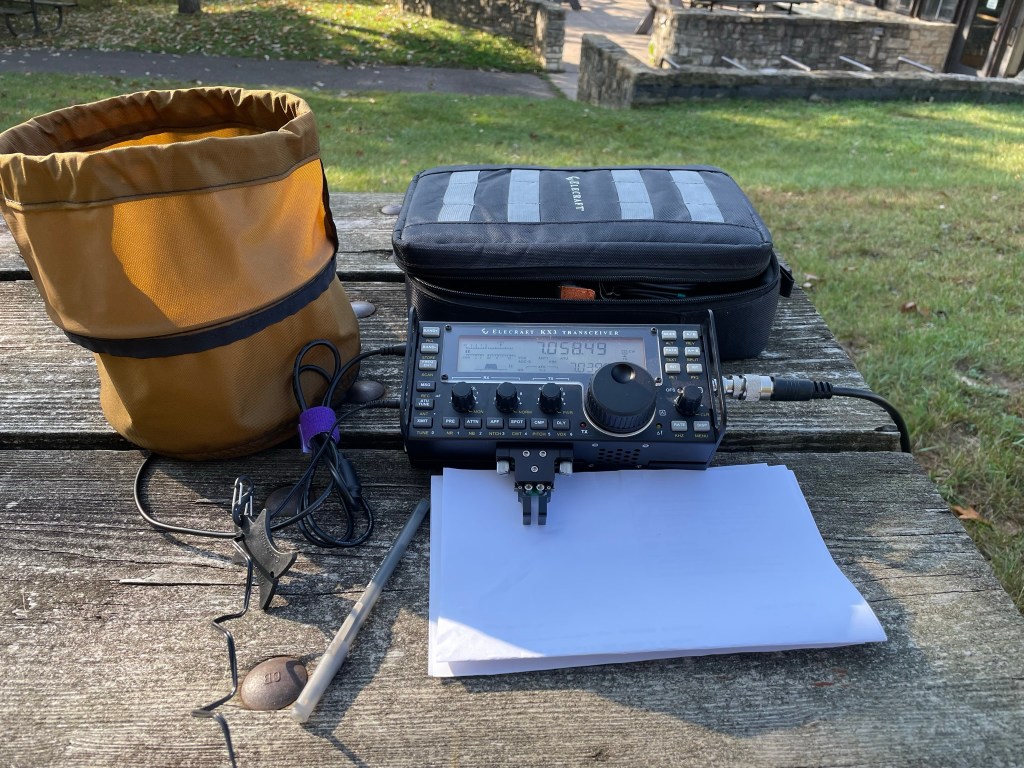
On the way home from work today I stopped at a previously unknown park – US-9385 – and do a quick activation. I’ve driven by this park hundreds of times and never knew it was there until I saw it on the POTA website maps.

This scenario is exactly why I bought this radio. Short, quick stops or lightweight, all-in-one kits on extended trips type situations. I stopped at the park, found a spot to park the truck, walked a ways to a bench, and then was on the air in less than 2-3 minutes.

No throw line. No vertical antenna assembly. No coax along the ground.

Granted, no gain and no elevation for the antenna, but that is exactly what this setup (the Edgewood package) is – a quick and easy to deploy kit with classic Elecraft quality.

20 meters wasn’t the best at the time (should have considered 15m given the time of day), but I still had 10 contacts in about 26 minutes. Not bad in my book. I did have one hunter tell me “QSB QSB”, which I can confirm was the case with one of the contacts I received. He was in and out.

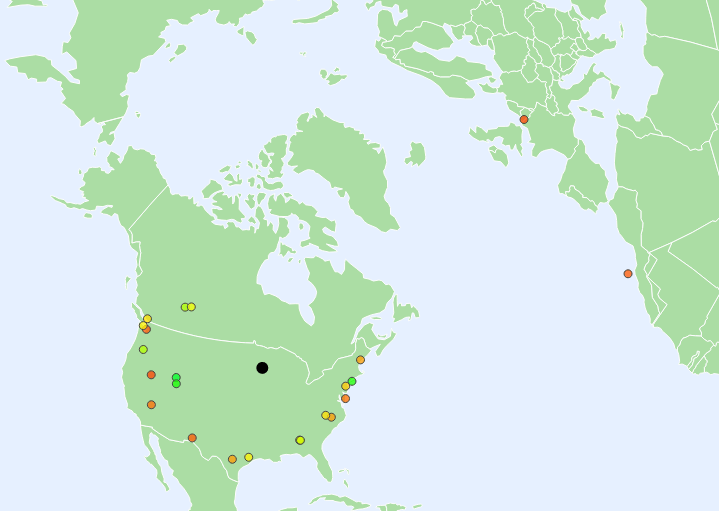
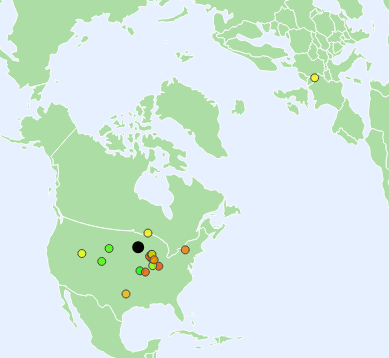
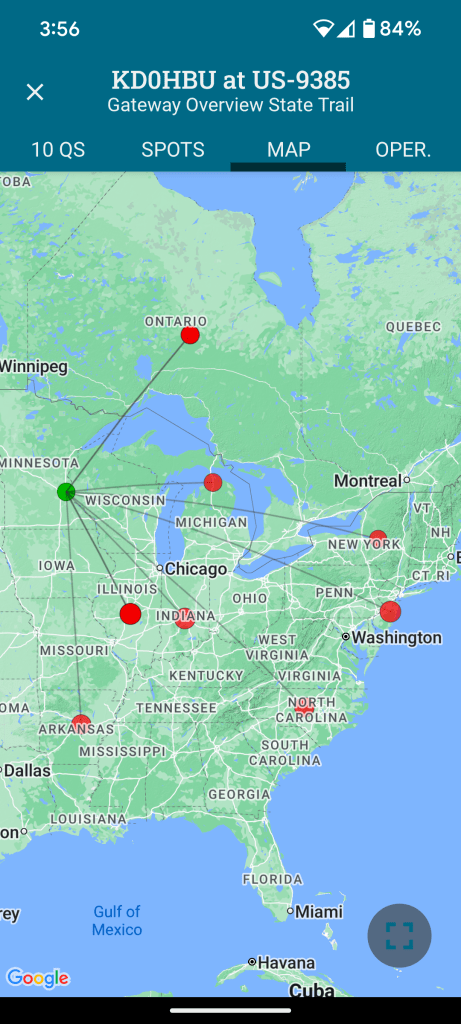
Map of contacts below. Note that having two in Ontario and two in Indiana means that the dots below overlap. 10 contacts but eight dots on the map.
Overall Impressions

There is a lot in this little package. It fits nicely in the hand (I hold it in my left to leave my right free for sending CW and logging contacts). Not too wide for my hands, and not so narrow that I fumble with it.

Your mileage may vary.

The screen isn’t huge, but even as someone with reading glasses I had no trouble with clarity of the characters.

Keeping things small means that there are few buttons (4 in total) and, with the small screen there is a short learning curve on how to navigate. The printed manual is well laid out as usual and reading it end to end gives you all you need to get going quickly.

The Paddle

The included paddle (at least included in the Edgewood Package) is the v2 at this point (I believe). My opinions here are mixed. While it isn’t uncommon for me to have to correct something I send, and perhaps it was just today being the first time I’ve had this on the air, I found myself constantly having to send corrections. In the shack it felt fine, but actually at the park bench operating it was different somehow.

Standing up halfway through the activation actually felt more natural than sitting with it in my hands. Not sure why, but it changed the dynamic just slightly.

I felt sloppy and unable to fine tune my sends like I can with other external paddles. This seems to align with other people’s impressions even with the v2. I plan on getting the N6ARA tiny paddle adapter from Tufteln. Every person I’ve seen review it raves about that combo with this radio.

It is still well designed as a portable paddle that can be turned around in its connection to keep it out of the way for transport.

If you want a great paddle comparison, check out N7KOM’s video on the subject.

The Screen Cover/Logbook

The included screen cover is well designed and fits snugly. It has slots for paper logs (Elecraft makes them available here) and a small pen that is included in the package.

The pen is basic, metal, and small. It works as intended but may not be well liked by folks with bigger paws. The pen tip produces a line that isn’t too wide for the size of the log paper rows, so it is well selected for the intended purposes.

The log pages are just the most important information. QTH, Date, and Band at the top, with a table below it with rows to record Time, Call, and Info (I use that for QTH or reported P2P identifiers). I find that you have to stack several of them to keep them from moving side to side when writing.

The Battery

I haven’t put it through its paces yet, but it seems to be more than enough for what this is built for.

Charging is not a quick affair. Out of the box I let it charge for several hours. They have a quick charger available that has to be used with the battery taken out of the radio. The built-in charger does its job albeit slowly.

Other Notes

If you use headphones or ear buds (and I recommend you do), find some with a right-angle plug. I found that my straight connector plug ear buds interfered with the screen cover.

The Case and an Alternative

The included case with the Edgewood Package is standard Elecraft fare. It is a scaled down version of the cases for the KX2 and KX2. Minimal, soft, and with a couple of pockets on the outside (and one slot pocket inside).

Seeing Tufteln’s modified Pelican M40 case, I decided to grab one myself and go to work with my heat gun. They are readily available on Amazon or local outdoor retailers. I will say, however, that if you’re not confident and willing to potentially ruin an otherwise great case, going the Tufteln route might be the best option.

About ten minutes total time of carefully, slowly heating each side where the antenna is too long to go into the case, and then slowly putting pressure with a rounded object gave me just enough room on each side to easily get the radio with attached antenna (side storage attachments, not attached to the top connector).

If you go this route be really careful not to change the fit of the two halves of the case together. Keeping the heat focused below the lip of the bottom half and keeping the pressure on the rounded object about halfway between the bottom and the lip is what worked well for me.

Putting the coiled counterpoise wire on top of the radio and closing the lid provided enough friction/pressure when closed to keep things from sliding around inside.

This isn’t as lightweight as using the soft sided case from Elecraft, but offers far more protection from weather and bumps.

Conclusions

So, am I happy with this little radio given all the many months of being on the fence whether to purchase or not?

After one park activation and roughly 11 QSOs total?

An emphatic yes*

(*I don’t regret it at all – yet – but it isn’t a “buy once, cry once” radio)

It is smaller than my KX2. It lacks the capability and frequency range of the KX2 as well, let alone the other mode availability.

It does, however, provide ergonomics, portability, and my most used bands in a smaller package.

If I could only choose one of the two, which would I land on?

The KX2 is the better radio overall in my opinion. But I can honestly say that even with the AX1 antenna, I’ve never been able to comfortably stand and send CW like I could today with the KH1.

Going someplace without trees and a place to sit, standing there with KH1 in hand is an option I didn’t feel like I could do easily with the KX2. Since I don’t do much voice operations, the KX2 feels like more radio than I need. Having said that, having the option of SSB is something I may be glad to have depending on the situation.

Of course, having gotten my KX2 used for a really, really great price means that it is an easier pill to swallow than if I bought both at MSRP with all the options.

The KH1 fits my use cases well. As with any large purchase, and ham radio is nothing if not large purchases for most people, take your time and do your research.

An Aside

With today being October 1st, did anyone get in on the first 100 new MTR3b units that became available today?

Capacitive touch keyer built-in. Volume control (something lacking in my MTR4b). Adjustable side tone. Color LCD display.

All in a ~134g package.

They say they plan on ramping up production to large scale due to their anticipated demand, and having sold out the 100 units today in “…a few minutes” seems to validate their assumptions.
Building a 3D printed portable vertical antenna

I have a problem.

It is probably a common one amongst hams but it takes significant amount of time, effort, and resources in my spare time.

……

I like to create/build/home brew things. Like…all the time.

Its a sickness (or so my wife thinks).

Anyway.

I have had a QRP Guys Portable Tri-band Vertical kit for a while, and it is a great kit that is easy to assemble and works great. It is small, lightweight, and provides 20/30/40 meter coverage. Run the radiating element up a collapsible pole and you’ve got a field antenna that sets up quickly.

Since I was raised an “Army Brat” and it was drilled into me from an early age that “two is one, one is none”, I never stop at having just one POTA/SOTA vertical antenna system.

My Super Antenna, CHA MPAS Lite, Buddistick, Wolf River Coils Silver Bullet, and others can attest to that.

I might have another problem – antenna addition!

After having spent some time researching options, I decided on the following factors being important to me:

  • No kit – I’ve done multiple kits and while I enjoy them and will still do more in the future, I wanted to build something more “DIY” than that
  • Lightweight
  • Multi-band (Ideally 20/30/40/60/80)
  • Most parts (if not all) are already in my possession amongst my surplus of wires, connectors, and such
  • Inexpensive in case I do have to buy anything (i.e. less than $10 USD) out of pocket (not including what I have already purchased for past projects)
  • Occupy some degree of free time 😉

I then settled on wanting a tapped coil design that would allow me to play with the tuning to find the sweet spots per band, and after looking at various home brewed ideas, I found SA2CLC‘s Vertical Antenna Loading Coil on Thingiverse.

Printing the Parts

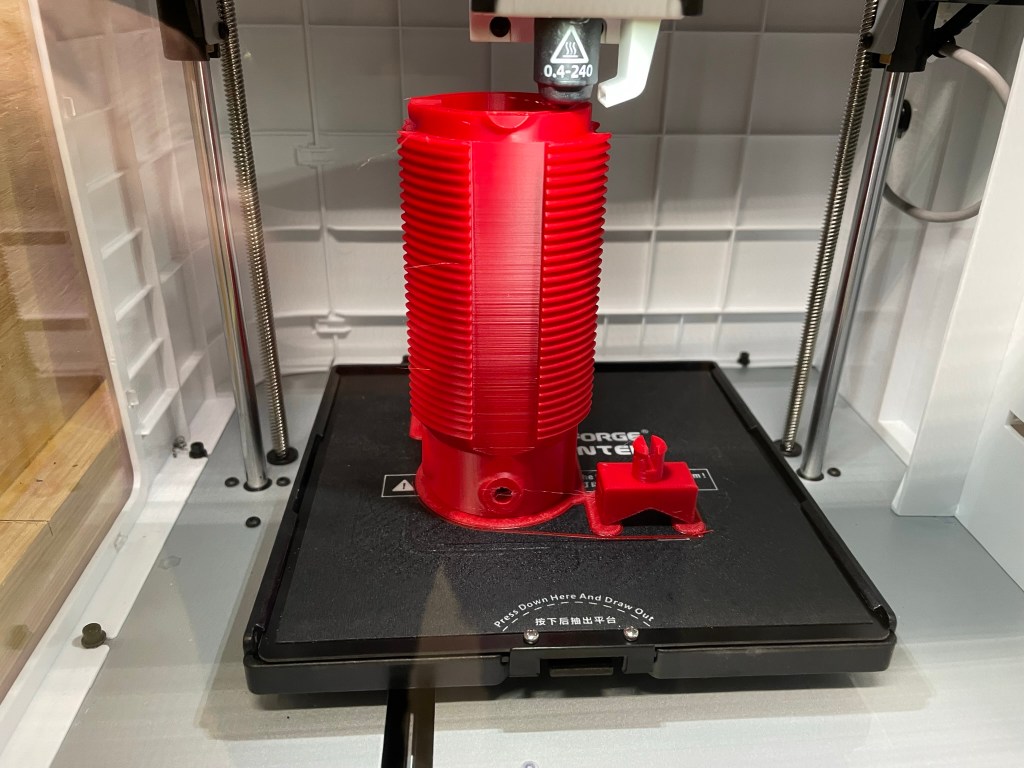
It checked all of the boxes above and, after downloading the STL files, I begun printing the coil form and mounts. I have a couple of printers, but find that my Flashforge Adventurer 3 provides the most consistent ABS prints for me. I’m not a fan of the constrained print area of this printer, but it does do a good job at whatever I throw at it.

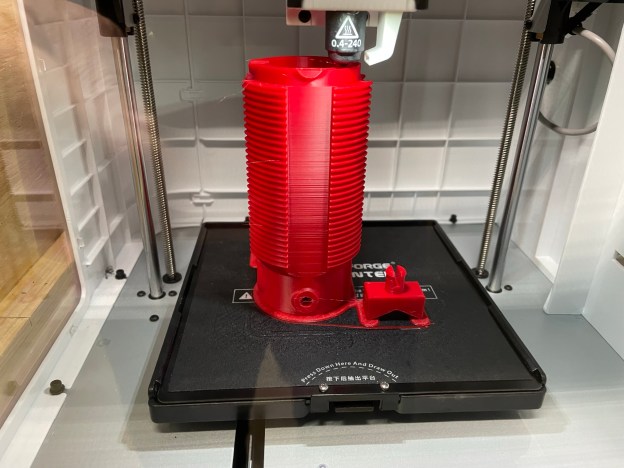
The photo above is about 90% complete. I have to give SA2CLC a lot of credit for an elegant design. No supports are needed to print this model, and it is well laid out and logical. Great work!

I chose to use ABS and printed the parts at 50% infill at standard quality. My goal here was to have a balance between weight and strength, with ABS widely used in products where durability matters.

About 15 hours later I had three parts; the coil form itself, and two mounts which allow you to affix the coil to a telescopic pole.

Upon completion of the print, I immediately realized a mistake on my part – I chose ABS for all of the parts, and the two mounts require some flex in the prongs so that they can be inserted into the body of the coil.

ABS doesn’t like to flex like some other plastics do, and I quickly snapped one prong off of the first piece I tried to insert into the coil, so I kicked off another print of just the mounts using PETG. That is what SA2CLC used and posted to his model page on Thingiverse.

That is another problem I have – reading the directions!

I then sent off a print to my Creality Ender 3 (I don’t have the higher temp nozzle to allow for PETG prints on the Flashforge – yet) and within a couple of hours had two new mounts that won’t break on me.

Assembling the Coil

In addition to the ABS/PETG printed parts, I used the following materials:

  • 1.25″ non-insulated alligator clips
  • SO239 chassis mount connectors
  • 18 gauge aluminum wire
  • 6-32 machine screws and nuts
  • 4mm binding post connectors
  • short length of 18 gauge wire to connect the center plug of the SO239 to the coil
  • ring terminals
  • aluminum tape (see below)

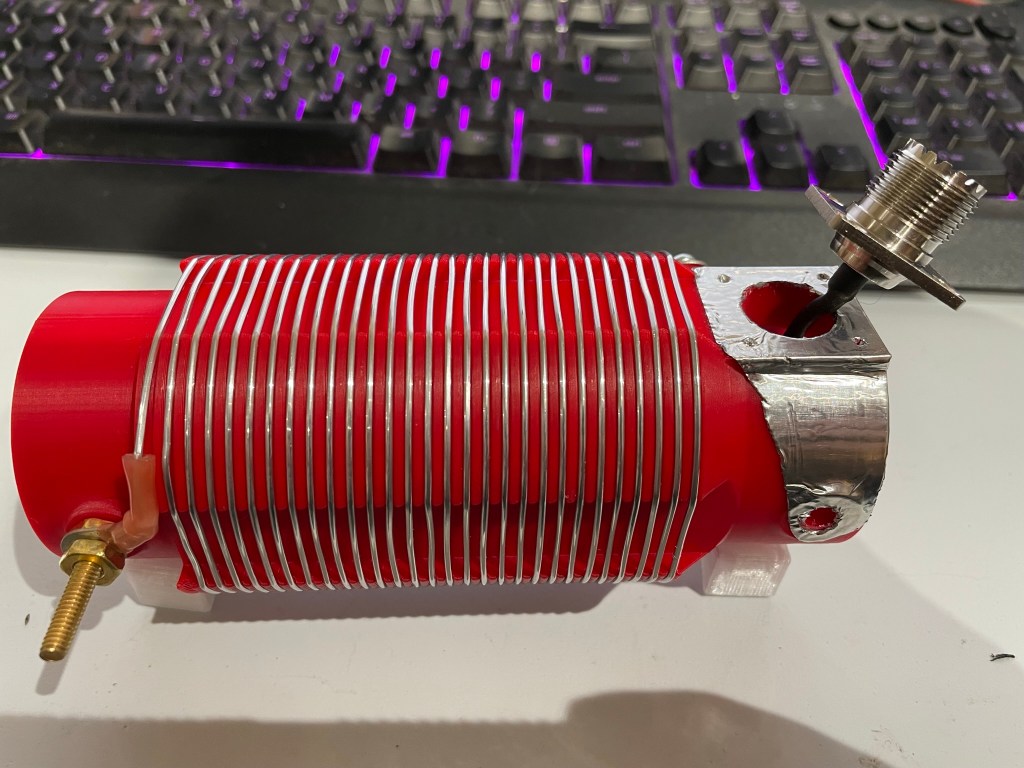
I followed the excellent YouTube video that the creator posted as a part of his model. The two places that I deviated slightly was first in connecting the ground for the SO239 to the binding post connectors. Why? I had seen this used in other projects online and had been wanting to apply it to a project of mine for a while, so I went ahead and added it here. Time will tell if this is effective or not, or even if it will stay put or not.

UPDATE: I found some thin sheet metal from some ducting work I had done previously that I decided would be more durable than the aluminum tape shown in the next photo. I cut out a piece that is roughly the same dimensions as what is shown below. As before, we’ll see how effective this is over time.

You can see the white PETG mounts on the bottom of the coil – one left and one right.

The second deviation was the use of another 6-32 machine screw and wingnut for the radiating element connection instead of a binding post as in the creator’s design. As with the aluminum tape, I may change that out but I’ve used wingnuts on multiple antennas and find them to be solid connections that are still quick to add/remove wires to. That is especially true when the wires use spade connections.

We’ll see how it goes in the field.

Stay tuned for Part 2 – Assembly and Initial Testing

First Time POTA – sort of….

I just completed the CWOps Basic Course and decided to take my new and improved CW skills (or lack thereof) to the field

Afton State Park (K-2466) is the closest state park in my part of the Twin Cities suburbs, so I packed up my KX3 and Wolf River Coils vertical and headed out the door this morning.

A beautiful early fall day awaited me along the St. Croix river which forms the border between Minnesota and Wisconsin.

After arriving, I quickly setup my Wolf River Coils antenna which had already been tuned from earlier use for 40m. This was mistake number 1 – knowing that 40m is not particularly great for mornings, I chose convenience over propagation.

Live and learn.

I setup the radio on a park bench close to the pavilion and restrooms area in the above picture. Being fall, I had to first cleanup the walnut husks the local squirrels dissected and left everywhere. Without thinking I sat down on the bench and didn’t think about the walnut oils which make excellent stains.

Mistake number 2.

I only called CQ for a couple of minutes before I had my first contact – KA0WKG gave me a 579 in Colorado. I started to think that maybe 40m wouldn’t be too bad today and I might get this activation done in no time.

Mistake number 3.

It was another 30 minutes of calling CQ before I landed another QSO. I did have one station come in between the first and second, but after giving a signal report they mysteriously vanished with no report back to me, so I’m not counting that one.

K9IS in next-door Wisconsin came in with a 559.

Another 20 minutes before my third and final completed QSO for the morning happened, with K0NIA in Iowa (also next door) providing a crisp 599.

With time running out for me today, I packed up and headed down the road towards home. Activated or not, it was a great day to get out of the house among the trees while still enjoying a great hobby.

Wolf River Coils 80-10m Vertical

So lessons learned:

  • Be ready and willing to change bands in order to match the conditions. This is obvious and something that I recognized at the start, but chose convenience instead – especially after getting the first QSO in short order.
  • A longer wire antenna or even a taller vertical might have increased my ability to both get out and be heard. RBN wasn’t showing great propagation for me – even at full output on the KX3.
  • Watch where you sit 😦

Get out and get on the air!

Chameleon TDL SWR

I recently had been looking at other quick to deploy antenna options for POTA and general camping activities. Not looking for anything ultralight (I’ve got some resonant dipoles that hit that mark), and having really been impressed with the quality of the Chameleon MPAS Lite and EMCOMM III Portable, I naturally looked at their other offerings.

I was drawn to the concept of the Delta Loop antenna, so I begun looking at the Tactical Delta Loop (TDL) that they offer. I was not, however, in a hurry to drop the cash for yet another expensive antenna system, not matter how great and high quality it is.

I want my wife to want me still….

It then dawned on me that you can assemble a TDL from the MPAS Lite if you acquire the CHA HUB Kit and another 17′ whip.

At less than half the price of the CHA TDL itself, and giving myself even more deployment options for this system when combined with the MPAS Lite, I went ahead and ordered the two add-ons which arrived yesterday.

That gives me multiple setup options; vertical, inverted-V, inverted-L, delta loop, sloper, horizontal – all from a single system that is extremely robust.

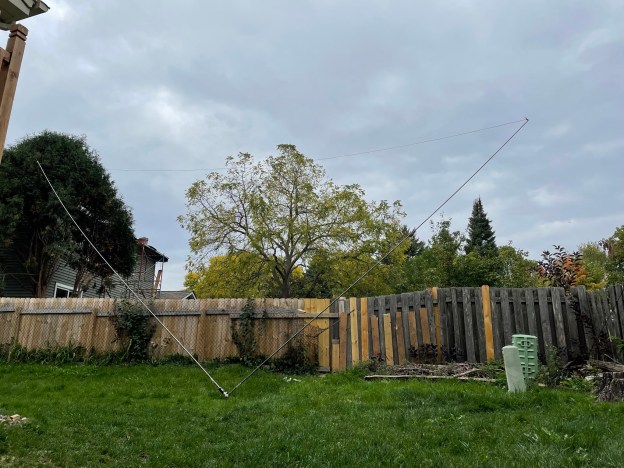
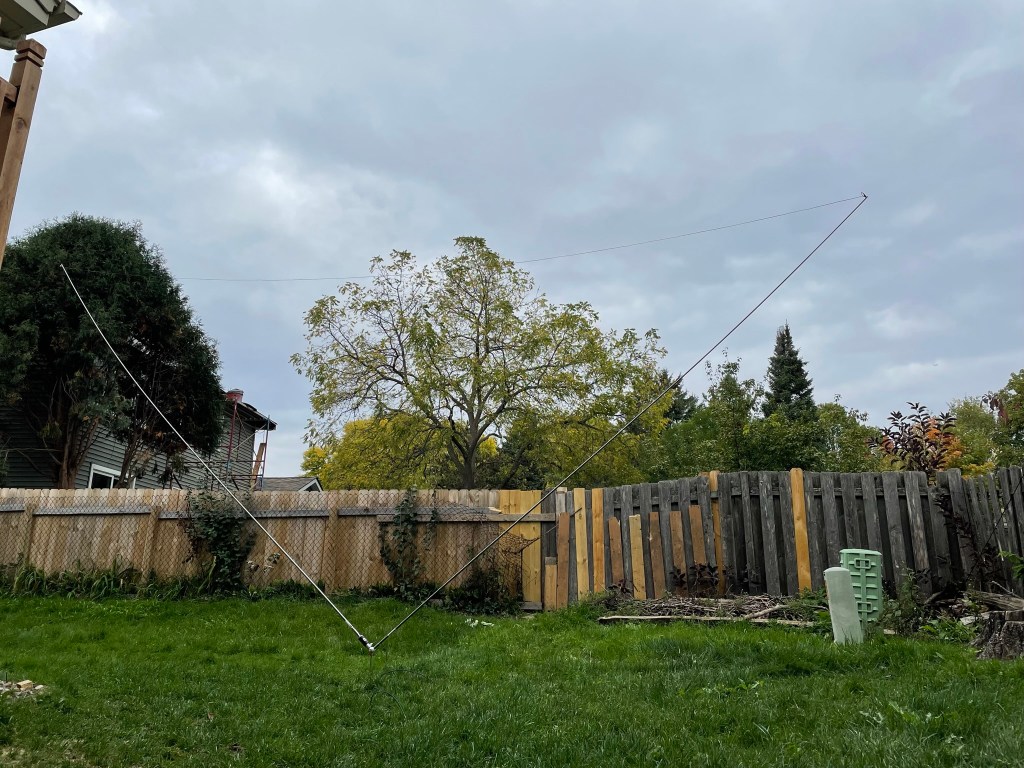
Setup was straight forward and quick. No throwing arborist lines into trees. Just attach the components to the spike in the ground and go.

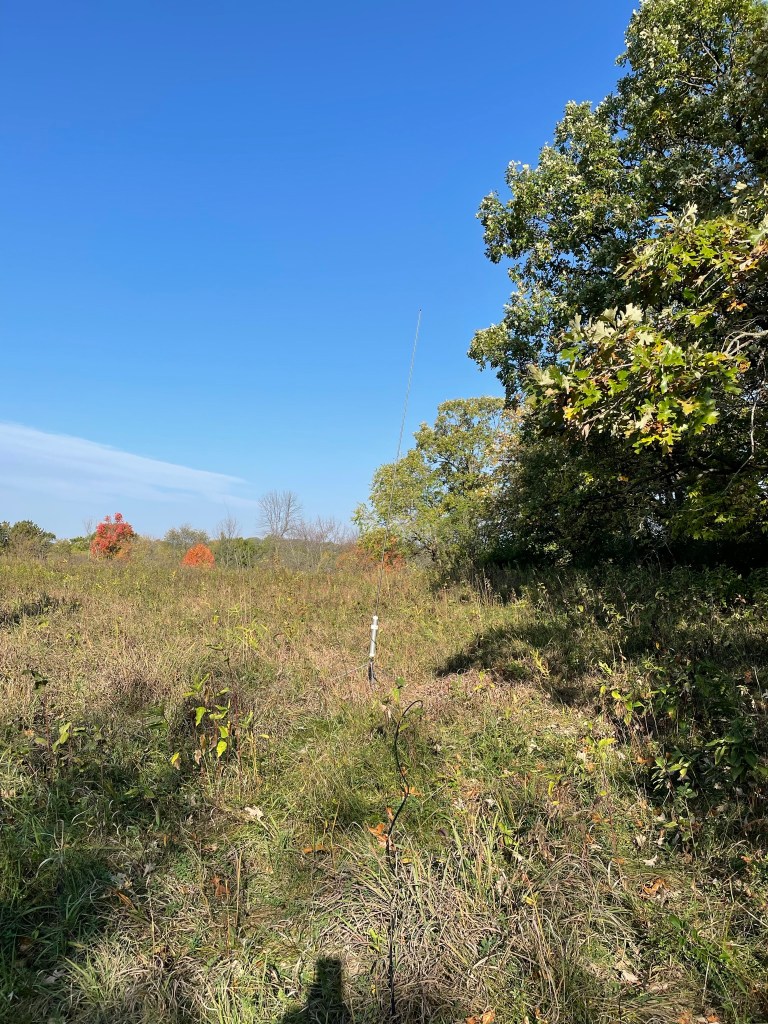
Not the most ideal location – please ignore the neighbor’s patch-worked fence – actual on air testing will be done in an open field

I have not had it long enough to do any sort of actual propagation testing and on-air checks, but I did do a quick setup and SWR analysis using my Rig Expert AA-35 Zoom.

SWR is a bit high for 80m (well, not with a matchbox and not high enough that it would cause any real issues), however for 40/20/15/12 it is less than 2:1, and 10m spans between 1.8:1 to 2.21:1.

Not bad! Not bad at all. And with deployment being less that 5 minutes from unpacking to wired up to my radio, I’m excited to put it through its paces.

Look for a follow up with WSPR reports, on-air CW contacts for QRP/QRO, and more!

Nelson Antennas EFHW

I recently purchased an antenna on Ebay. The seller, Nelson Antennas, has several offerings available and based on a recommendation from someone in my CWOps Basic Course class, I purchased the UJM-EFHW-40-10 along with the 75/80 meter resonant kit.

The antenna is rated for 200w and from 10-40m (75/80 with the add-on as well), or more specifically for 40, 20, 15, and 10 meters in most installations. The seller does indicate that 12m is often usable depending on how you’ve installed it, with 30m and 17m usable with a tuner.

There are two things that I highly value from a seller (corporate, private, etc.); quality craftsmanship and good communication.

In this case I got both.

Overview and Construction

The antenna (40-10m portion) itself is 65 feet of 18 gauge marine wire, with a matchbox containing the unun and SO-239 connector. There is also an eyelet for various mounting options.

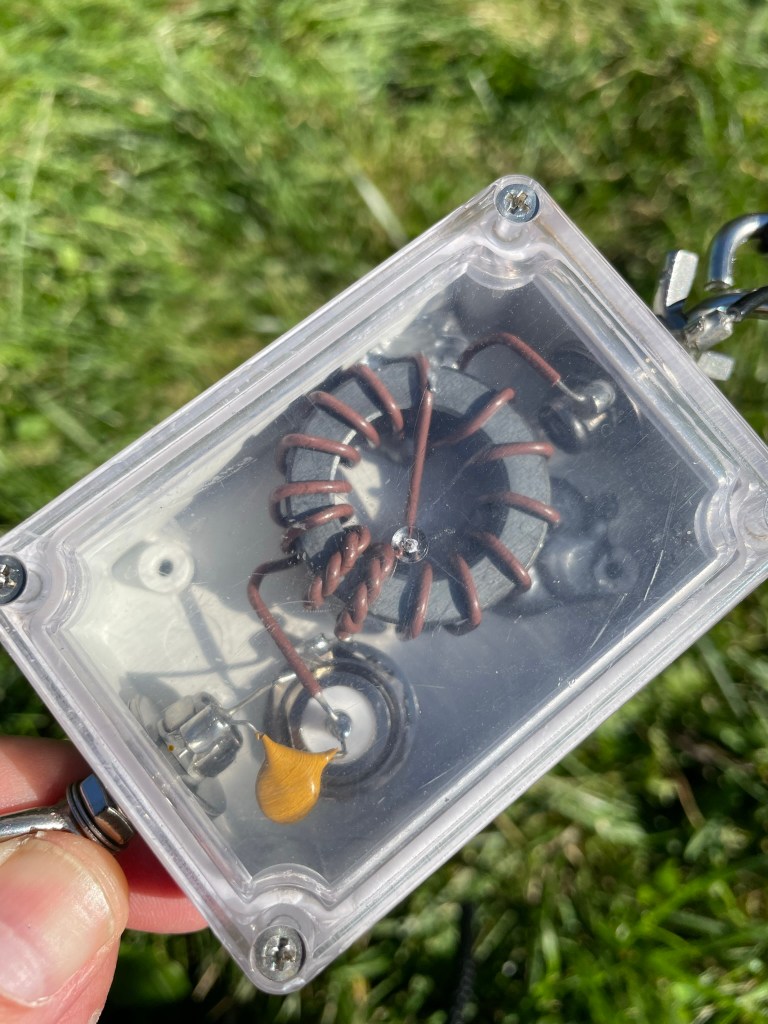
To my eye that looks to be a 49:1 unun

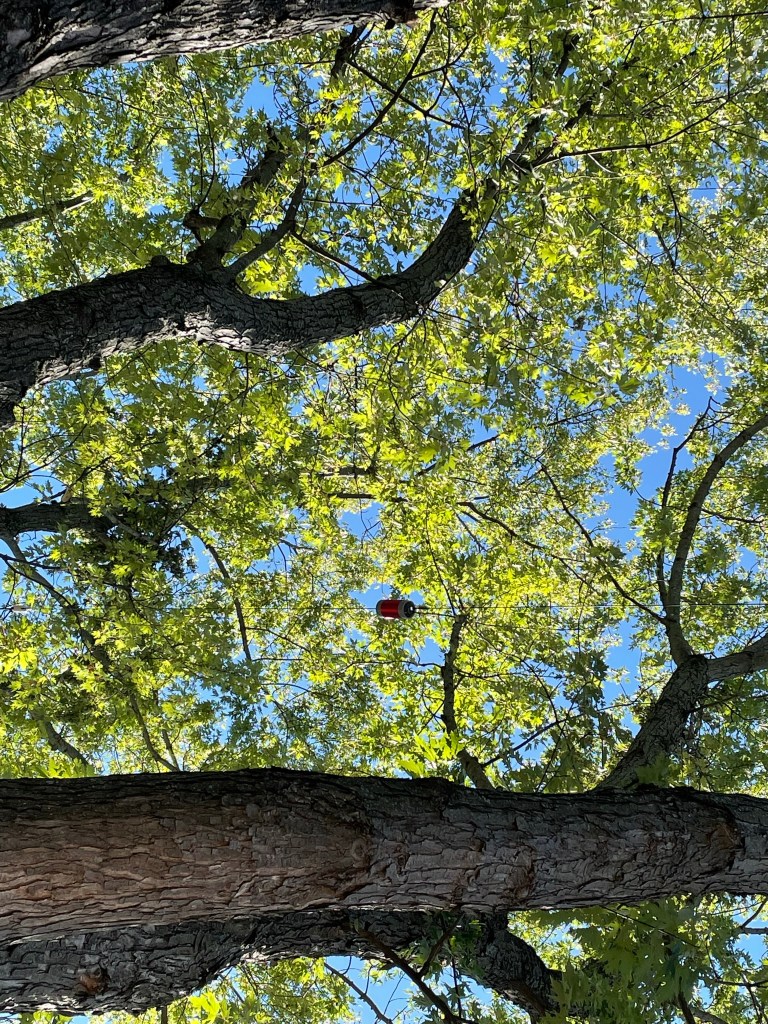
A short way up the wire from the matchbox is a loading coil, which then continues on towards where the add-on resonant kit is attached. That add-on kit adds another 6 feet or so of length. That is still about half the length of a full sized EFHW for 80m, and given my lack of backyard space, made this the best choice for my use.

The 75/80 meter coil is visible about halfway up this image.

Every antenna is some form of compromise, and there are multiple ways that compromises present themselves. From the construction of this antenna, quality is not an area where the seller compromised.

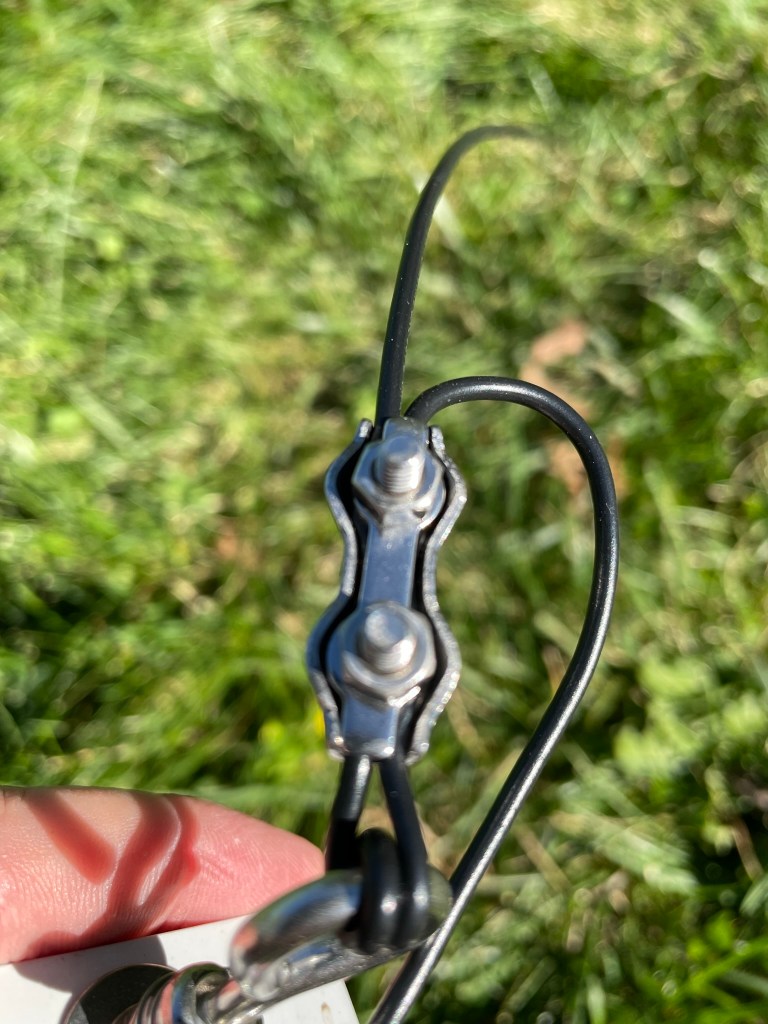
All metal parts are stainless steel. The wire is attached at various points using steel connections instead of nylon tie-wraps as I’ve seen from other vendors.

My phone really liked focusing on my fingers instead of the subject of the photo, but you “get the picture”. Ahem….I’ll show myself out.

The matchbox base is gray, and the cover is transparent allowing you to see the components. All solder points look solid and nothing moves or rattles.

This antenna just feels solid in the hand.

Results

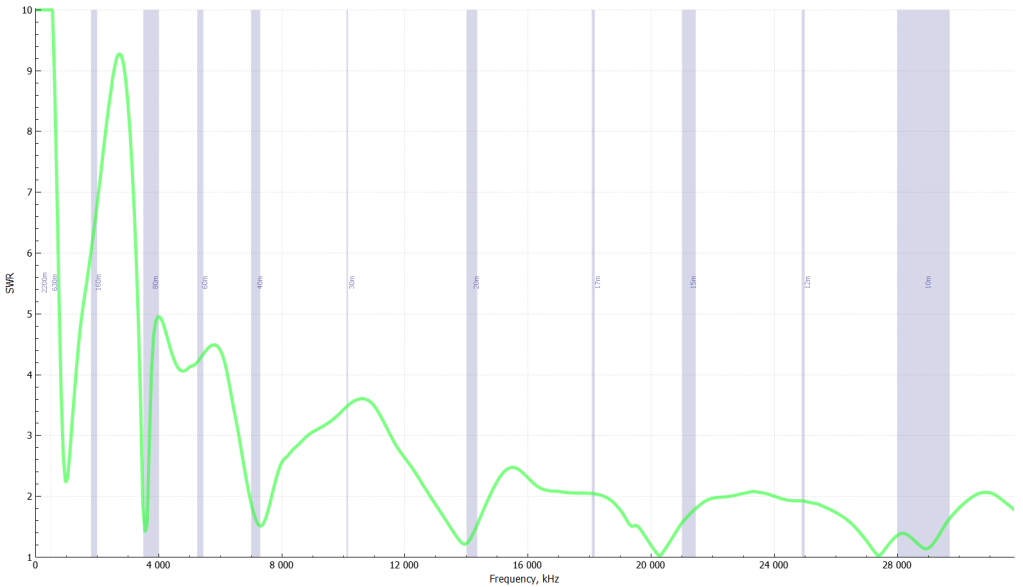
The below is a quick analysis showing what I got with one end about 25 feet up in a maple tree, with the feedline end hung at about 8 feet atop a post, resulting in a sloper deployment.

With the 75/80 resonator add-on attached, 3.5m is sitting about 1.4:1, with 40m, 20m, 15m, and 10m about the same or lower in SWR.

In addition, 17m has a fairly low SWR of 2.04:1, 12m is at 1.92:1, and 30m could certainly be tuned into something that would be usable (if not as efficient as a resonant antenna would be).

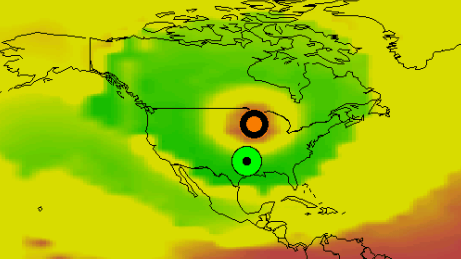
This afternoon as 20m was starting to become more usable, I quickly checked VOACAP via my Hamclock running on a RPI4 and ran a test using WSPR.

A nice big glazed doughnut surrounding me showing how I am likely to skip over adjacent states
See the doughnut?

It definitely performed as expected based on propagation predictions. All in all, 30 stations picked up the 100mW WSPR transmission at about 1pm Central (18:00 UTC) on this late September day in Minnesota.

I waited a few hours and retried the WSPR experiment above. Conditions had improved and at the same output of 100mW, I saw the following:

Similar to what I got before (VOACAP is still showing a doughnut around my QTH), but with the added bonuses of Spain (Islas Canarias off of Morocco) and Belgium.

And one more on 40m later in the afternoon

UPDATE 2021-09-2021

The day after posting this review I did a more “real world” test in between meetings as I work from home. Below is 20w on 20 meters at about 11:30am Central (16:30 UTC) on RBN.

I also made one quick contact on CW about an hour earlier than this, and had a nice QSO with N0ZB in Kansas.

Now I just need to log some contacts and stop playing with it. 😉

Communication

I made my purchase fairly late in the evening as I was lying in bed and on my phone. To my surprise, I quickly received a message from the seller asking if I’d like him to attach the 75/80m kit before shipping. I responded in the affirmative and the next day got a shipping notification.

How is that for fast service and good comms?

Summary

With over 10,000 reviews on Ebay and a 100% customer feedback rating (myself included), I feel highly confident in recommending this antenna to anyone looking for a shortened 80m capable antenna.

While I haven’t had the antenna in the air for very long, I have found it to capture less noise than my 5 band vertical, and blend into the neighborhood landscaping (trees) much easier as well.

Great quality and craftsmanship, and good comms.

I will definitely be looking at his online store again for future purchases.